In recent years, the Greta Thunberg Speech Transcript has emerged as a seminal resource for understanding the global climate movement and the urgency of environmental action. Greta Thunberg’s speeches have captured international attention due to their unique combination of scientific evidence, moral clarity, and personal conviction.
Through her powerful rhetoric, Thunberg highlights the immediate and long-term consequences of climate change, emphasizing the profound impact it will have on future generations. Her words not only convey the gravity of ecological damage, economic consequences, and social inequalities caused by environmental neglect, but also serve as a moral call to action, urging leaders, corporations, and individuals to take responsibility.
Central themes in her speeches include the urgent need for decisive climate action, the importance of youth empowerment, and the necessity of holding leaders and corporations accountable for their contributions to the crisis.
Beyond scientific facts, Thunberg’s personal reflections, including her own experiences of anxiety, hope, and commitment to sustainable living, resonate deeply with audiences and have inspired a global movement of youth activism.
The Greta Thunberg Speech Transcript is, therefore, not only a record of her advocacy but also a roadmap for collective responsibility, demonstrating how individual and collective efforts can shape a sustainable future for the planet.
| Section | Key Points |
| Climate Crisis | Scientific evidence of climate change, rising temperatures, extreme weather, and ecological shifts. |
| Impact on Future Generations | Moral implications, ecological damage, economic consequences, and social inequalities. |
| Call to Action | Urgency for immediate action; collective responsibility; youth empowerment. |
| Accountability | Holding political leaders and corporations accountable for climate inaction. |
| Personal Reflections | Emotional impact on youth; personal commitment to sustainable living; hope and resilience. |
| A Global Movement | Mobilization of youth worldwide; solidarity and collective climate advocacy. |
| Conclusion | Urgent, moral, and inspirational message; emphasis on sustainability and global responsibility. |
Greta Thunberg Speech Transcript
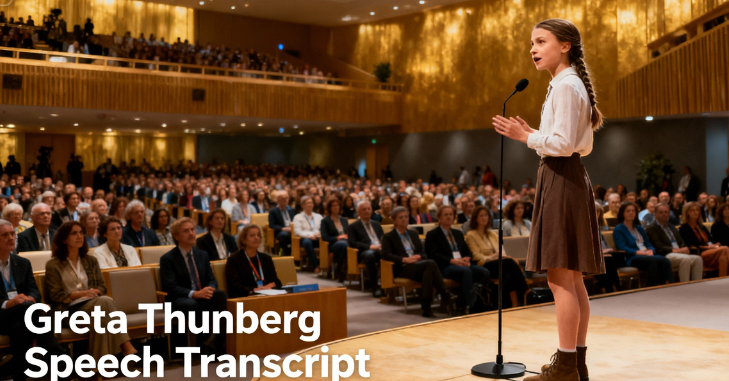
In recent years, Greta Thunberg’s speech transcript has emerged as a powerful voice in the global climate movement. Her speeches have brought urgent attention to the climate crisis, emphasizing its immediate impact and long-term repercussions on future generations. Thunberg’s unique blend of personal conviction, scientific advocacy, and moral accountability makes her a compelling figure in the fight against climate change.
Climate Crisis
The Science of Climate Change
Thunberg’s speeches often begin with a clear presentation of the scientific consensus on climate change. Rising temperatures, increased frequency of extreme weather events, and shifting ecological patterns are just a few indicators of a planet in distress. Thunberg underscores that climate change is not a distant future problem; it is happening now, impacting people and ecosystems across the globe.
Impact on Future Generations
Thunberg passionately articulates the moral implications of climate inaction. For her, and many young activists, the climate crisis represents a betrayal of future generations. If current generations fail to act decisively, the consequences will be catastrophic:
- Ecological Damage: Continued greenhouse gas emissions will lead to irreversible damage to ecosystems, endangering species and natural habitats.
- Economic Consequences: Climate change threatens economies worldwide. Thunberg warns that the costs of inaction far outweigh the investments needed to implement sustainable solutions.
- Social Inequality: The effects of climate change disproportionately impact marginalized communities, exacerbating existing inequalities. Thunberg highlights that those least responsible for climate change are often the most affected by its consequences.
Call to Action

Thunberg’s speeches are characterized by a fervent call to action. She implores world leaders, businesses, and individuals to take immediate, meaningful steps to combat climate change. The core elements of her call to action include:
- Urgency: The urgency is a central theme in Thunberg’s rhetoric. She emphasizes that the window for effective action is closing rapidly. Each day without significant change exacerbates the crisis, and Thunberg challenges her audience to recognize the gravity of the situation.
- Collective Responsibility: Thunberg advocates for a collective responsibility to combat climate change. She calls on individuals, governments, and corporations to make conscious choices reflecting a commitment to sustainability. This includes:
- Transitioning to renewable energy sources.
- Reducing carbon footprints.
- Supporting policies that prioritize environmental sustainability.
- Youth Empowerment: Youth are at the forefront of Thunberg’s movement. By mobilizing young people through initiatives like school strikes, she has inspired millions to take a stand for climate action. Thunberg believes that young people will inherit the planet’s challenges, and thus they must be included in discussions about the future.
Accountability
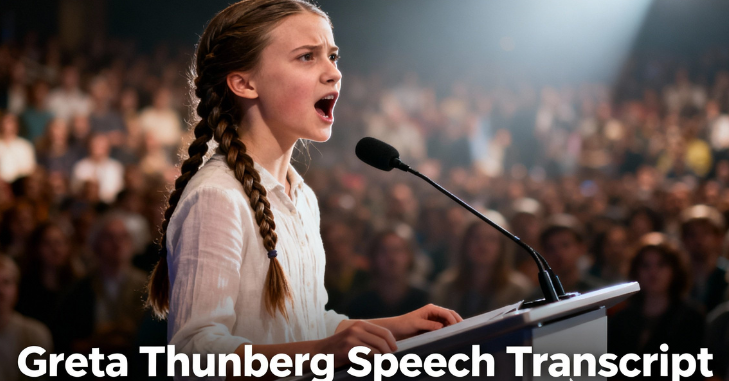
Thunberg is relentless in her demand for accountability. She often challenges political leaders and corporations to act in accordance with scientific recommendations. Key elements of her accountability rhetoric include:
Holding Leaders Accountable
Thunberg criticizes political leaders for their failure to implement effective climate policies. She stresses that empty promises and insufficient actions will not suffice. Leaders must be held accountable for their inaction and for perpetuating a system that prioritizes short-term gains over long-term sustainability.
Corporate Responsibility
In her speeches, Thunberg also addresses corporate interests and their role in the climate crisis. She calls for businesses to adopt sustainable practices and to prioritize environmental stewardship over profit. Thunberg highlights the need for transparency regarding corporate environmental impacts and the responsibilities they hold in achieving global climate goals.
Personal Reflections
Throughout her speeches, Thunberg shares her personal journey and reflections on the climate crisis. Her experiences reveal the emotional weight that the climate crisis carries, especially for young people. Key themes include:
Anxiety and Hope
Thunberg candidly discusses the anxiety and fear many young people feel regarding the future of the planet. She counterbalances this, though, with a message of optimism. By mobilizing and demanding action, Thunberg believes that young individuals can influence change and challenge the status quo.
Personal Commitment
Thunberg’s dedication to environmental advocacy is evident in her lifestyle choices. She promotes sustainable living, urging individuals to reflect on their consumption patterns and behaviors. By modeling responsible practices, she encourages others to follow suit.
A Global Movement
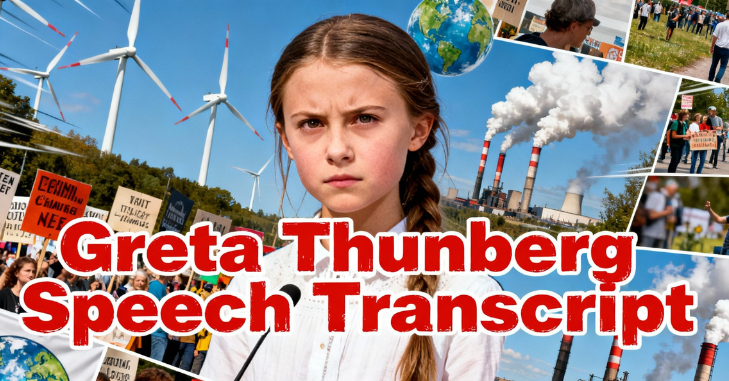
Thunberg’s impact extends beyond her personal journey; she has ignited a global youth movement. She emphasizes the importance of collective struggle and solidarity among young activists worldwide. Her message is clear: together, a united front can challenge entrenched systems and advocate for effective climate solutions.
Conclusion
Greta Thunberg’s speeches resonate with urgency, conviction, and a deep sense of responsibility. Her call to action reflects both a recognition of the dire state of our planet and an unwavering belief in the potential for change.
By holding leaders accountable, empowering youth, and fostering collective responsibility, Thunberg seeks to inspire a global movement that prioritizes the planet’s health and the well-being of future generations.
The climate crisis is an unprecedented challenge, but with voices like Thunberg’s leading the charge, there is hope for a more sustainable future. Each of us has a role to play in this vital mission. It is not only a question of survival; it is a call to dignity, justice, and responsibility for our planet and its inhabitants.
Want to know about Ionic Bonding Worksheet for GCSE, IGCSE, and Grade 8 Students—A Complete Guide with Free PDF Download, Answer Key, Practice Questions, and TES-Style Exercises Check out our Education category.
FAQs
Greta Thunberg tells world leaders during a U.N. climate session, “This is all wrong. The science has been crystal clear for more than 30 years.” How dare you continue to look away and come here saying that you’re doing enough, when the politics and solutions needed are still nowhere in sight?
Greta Thunberg’s speech communicates that the climate crisis is a straightforward ethical issue requiring swift, decisive action. The urgency is conveyed through stark, unambiguous language that leaves no room for delay, emphasizing the need for immediate and responsible responses to protect the environment.
At the age of eleven, Thunberg was diagnosed with selective mutism, obsessive-compulsive disorder (OCD), and Asperger’s syndrome.
” The threat of terrorism is not as serious as climate change. “Global warming threatens our health, our economy, our natural resources, and our children’s future. We must act.” “Today, we can see with our own eyes what global warming is doing.