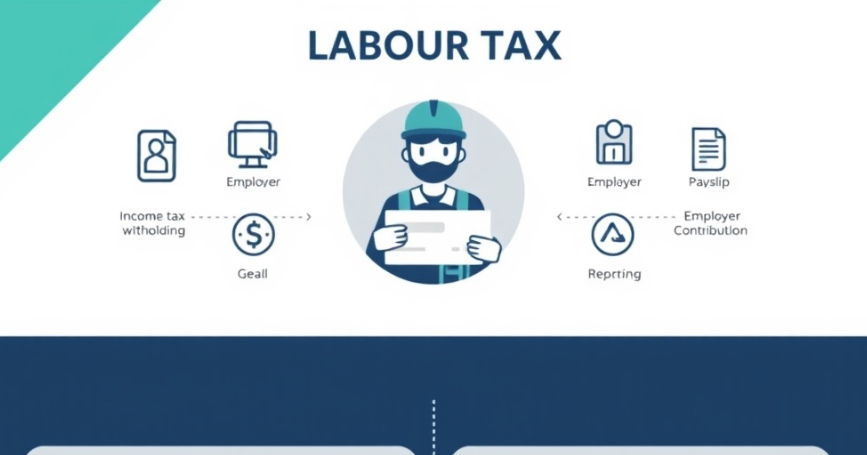
Labour tax is a broad category of taxes and mandatory contributions tied directly to work and employment, and it plays a vital role in funding social protection systems such as pensions, healthcare, and unemployment insurance. It includes income tax on wages, payroll taxes, social security contributions, and self-employment levies, with both employers and employees sharing responsibility for compliance.
Understanding labour taxation is essential for workers, employers, and policymakers, as it affects take-home pay, hiring decisions, economic competitiveness, and social equity. Accurate calculations, timely withholding, and proper reporting are critical to minimizing compliance risks and optimizing outcomes.
| Aspect | Details |
| Topic | Labour Tax |
| Definition | Employment-related taxes |
| Components | Income, payroll, social contributions |
| Purpose | Fund social programs |
| Who Pays | Employees, employers, self-employed |
| Legal vs Economic | Remitter vs cost-bearer |
| Calculation Basis | Gross wages, taxable benefits |
| Income Tax Rates | Progressive, withheld at source. |
| Social Security | Employer/employee split |
| Compliance Obligations | Withhold, remit, report. |
| Common Risks | Misclassification, errors, and late payments |
| Practical Guidance | Payroll systems, record-keeping |
| Policy Considerations | Employment, wages, equity |
| Key Takeaway | Compliance supports social programs. |
Labour Tax

Labour tax is a broad term that describes the suite of taxes and mandatory contributions tied directly to work and employment. Unlike a single, narrowly defined tax, this taxation encompasses income tax on wages and salaries, payroll taxes, employer and employee social security contributions, self-employment levies, and a range of employment-related levies and reporting obligations.
For policymakers, the challenge is to design this tax systems that raise necessary revenue while minimizing distortions to employment and supporting equitable social protection. These instruments finance social protection systems, pensions, unemployment insurance, and healthcare, and also represent a major source of revenue for governments.
Types
- Income Tax on Employment: The most visible component of taxation for individuals is income tax on employment income. Income tax systems commonly apply progressive rates to earned income, meaning higher earners pay a larger proportion of their income in tax.
- Withholding and Collection: For employees, income tax is usually collected through withholding systems administered by employers: employers deduct tax at source and remit it to the revenue authority.
- Social Security Contributions: Complementing income tax are social security contributions, payroll-based charges earmarked for social insurance programs such as state pensions, disability benefits, maternity and sick pay, and unemployment insurance.
- Employer–Employee Split: Many countries split social contributions between employers and employees, with statutory rates for each and, sometimes, ceilings on the earnings subject to contributions.
Who Pays Labour Tax?

Legal and Economic Incidence
Understanding who pays tax requires distinguishing legal incidence (who is legally obliged to remit the tax) from economic incidence (who ultimately bears the cost).
Employer Responsibilities
Legally, employers are typically responsible for withholding income tax and employee social contributions and for remitting both those amounts and any employer-side contributions to the tax authority. Employers, therefore, carry administrative obligations and legal liability for timely and accurate remittance.
Shifting the Burden
Economically, however, the burden of taxation can be shifted. High employer social contributions can translate into lower gross wage offers, reduced employment, or higher prices for goods and services, meaning workers, consumers, or business owners may ultimately bear part of the cost.
Employee Burden
Employees directly bear the burden of employee-side social contributions and the income tax withheld from their pay; both reduce take-home pay.
Self-Employed Liability
Self-employed individuals bear both the income tax burden and the full burden of social contributions (subject to their system’s rules), which can make effective tax rates for self-employment higher than for employment when both employer and employee shares are considered.
Policy Implications
Policymakers must consider both the legal and economic incidence, as the design of taxes affects labour supply, hiring decisions, competitiveness, and inequality.
How is Labour Tax Calculated?
The mechanics of calculating tax vary across jurisdictions, but some common principles apply. The tax base for employment-related taxes is usually gross wages and taxable benefits; allowable exemptions and deductions (e.g., pension contributions or certain reimbursements) reduce the taxable base in many systems.
Income tax is typically applied on a progressive basis with personal allowances and credits to reduce the burden on lower earners. Social security contributions are commonly set as fixed percentage rates of earnings, sometimes with different brackets or ceilings, meaning contributions stop once earnings exceed a specified cap.
Employer and employee contribution rates are often different, and specific programs (pension, unemployment, health) may have distinct rates and caps.
Compliance and Filing Obligations
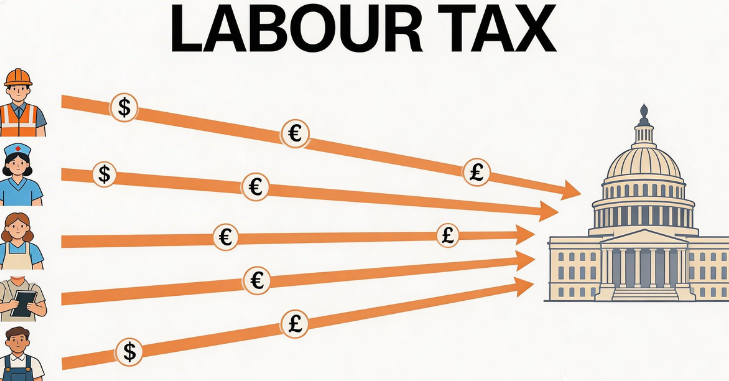
- Register with the tax authority as an employer before making any payroll payments.
- Obtain required taxpayer identification numbers or tax codes for each employee.
- Withhold employee income tax and employee-side social contributions at source each pay period.
- Calculate and determine employer-side social contributions, payroll taxes, and any employer levies due.
- Remit withheld taxes and employer contributions to the tax authority according to statutory schedules (monthly, quarterly, etc.).
- Submit regular payroll reports showing gross pay, deductions withheld, employer contributions, employee identifiers, and other required details.
- Use electronic filing and payment channels where mandated to reduce errors and meet legal requirements.
- requirements for benefits-in-kind and other non-cash compensation.
- Train payroll staff or use qualified payroll providers to maintain compliance with changing rules and rates.
Common Compliance Risks and Errors
Worker Classification Risks
Misclassification of workers treating employees as independent contractors remains a pervasive compliance risk. While it may reduce an employer’s immediate payroll tax costs, tax authorities often reclassify such arrangements, resulting in back taxes, interest, and penalties.
Incorrect Withholding
Failure to apply correct tax codes or to update withholding when employee circumstances change (for example, reaching a tax-free allowance or changing residency) can cause under- or over-withholding, creating liability for the employer or dissatisfaction for the employee.
Benefits and Deductions Errors
Incorrectly valuing or reporting benefits-in-kind, or failing to account for required deductions such as pension contributions, can lead to mistakes that may cause both financial loss and compliance problems.
Late Payments and Sanctions
Paying withheld taxes and social contributions late is a frequent cause of sanctions, along with interest charges and increasing penalties.
Cross-Border Complexity
Cross-border employment arrangements introduce complex issues, including determining tax residency, applying social security totalization agreements, and meeting withholding obligations for non-resident workers, which often require specialist advice to avoid double taxation or unexpected penalties.
Practical Guidance for Employers and Workers
Employers should prioritize correct worker classification, invest in reliable payroll systems, and stay current with rate and threshold changes. Establishing internal controls, performing periodic payroll audits, and maintaining clear documentation of pay decisions and tax treatments reduce compliance risk.
Employers should budget for the total cost of employment, the direct salary plus employer-side taxes and statutory benefits, and consider compensation packaging (for example, pension contributions and benefits-in-kind) in a tax-efficient and transparent manner.
Employees and self-employed individuals should be aware of their after-tax income, maintain precise records, and take advantage of allowable tax reliefs and pension contributions to minimize their tax liabilities. Those with cross-border engagements should seek specialist advice on residency, treaty relief, and social security coordination to avoid double taxation and ensure benefit continuity.
Conclusion
Labour taxation is a complex and consequential area of fiscal policy that affects workers, employers, and the broader economy. It encompasses income taxes, social contributions, employer levies, and a range of related obligations that fund social insurance and public services while influencing hiring, wages, and competitiveness.
For practitioners, the key priorities are accurate calculation, timely withholding and remittance, correct classification of workers, transparent reporting of benefits, and informed planning for changing policy environments.
Given the technical details and jurisdictional variations, employers and workers confronting complex situations, such as cross-border employment, self-employment, or unusual compensation structures, should seek professional tax and legal guidance to remain compliant and achieve optimal results within the law.
Want to know about Sports Marketing Salary: All You Need to Know, Factors Influencing, Salary by Job Role in Sports Marketing, Freelance vs Full-Time Sports Marketing Earnings, And Much More Check out our Finance category.
FAQs
A 3% tax is levied on the gross sales or receipts of a business or professional practice. This rate applies specifically to entities that are VAT-exempt under Philippine tax law.
In most systems, employers (or payroll administrators) are responsible for withholding employee amounts, calculating employer contributions, remitting to the tax authority, and submitting payroll filings. Employees and self-employed workers may have their own filing obligations too.
As an employer, you are generally required to operate PAYE within your payroll. PAYE is the system used by HM Revenue and Customs (HMRC) to collect Income Tax and National Insurance contributions from employees.