Understanding how to track a Probate Application UK is essential for anyone navigating the estate administration process after a loved one’s passing. Probate ensures that a deceased person’s assets are properly valued, debts are settled, and remaining property is distributed to the rightful beneficiaries.
Whether you are an executor named in a will or an administrator handling an intestate estate, knowing the application steps, required documents, and how to monitor your application can significantly reduce stress and delays.
This guide provides a clear overview of who can apply, how to submit a probate application, ways to track its progress, and the common challenges you may encounter during the process.
| Section | Summary |
| Probate | Legal process to manage and distribute a deceased person’s estate. |
| Importance | Gives legal authority, settles debts/taxes, and prevents claims. |
| Who Can Apply | Executors (with will) or administrators (no will), age 18+ |
| Needed Documents | Will, death certificate, probate forms, valuations, ID. |
| How to Apply | Complete forms, calculate tax, submit to Registry, pay fee. |
| Fee | £273 for estates over £5,000. |
| Tracking | Online service or contact Probate Registry. |
| Delays | Missing documents, complex estates, tax issues. |
| After Grant | Pay debts, handle taxes, distribute assets. |
| Challenges | Will disputes, tax complexity, and valuation delays. |
What is Probate?
Probate is the legal process through which a deceased person’s estate is managed, valued, and distributed. It involves obtaining the necessary legal authority to deal with the deceased’s property, money, and possessions. The probate process ensures that debts are settled, taxes are paid, and the remaining assets are distributed to the rightful heirs.
Importance of Probate
- Legal Authority: Probate grants executors or administrators the legal authority to handle the deceased’s estate.
- Debt Settlement: It allows the payment of debts and taxes before distributing the estate.
- Protection Against Claims: The probate process offers protection against potential claims on the estate.
Who Can Apply for Probate?

Executors
If the deceased left a will, the named executors in the will can apply for probate. Executors are responsible for managing the estate and ensuring that the deceased’s wishes are fulfilled.
Administrators
If there is no will (intestate), the court appoints an administrator to manage the estate. Typically, this is the closest relative, such as a spouse or child. In some cases, this can also be a non-relative, such as a close friend.
Eligibility Criteria
- Age: Applicants must be at least 18 years old.
- Mental Capacity: The applicant must have the mental capacity to handle the estate matters.
- Relationship: Generally, a close relative is preferred, especially in cases of intestacy.
Information You Need to Apply for Probate
When applying for probate, specific information and documentation are essential. Here’s what you will typically need:
- The Will: If available, the deceased’s will must be submitted with the application.
- Death Certificate: This is necessary to confirm the individual’s passing.
- Application Forms: You must complete specific probate application forms, such as:
- Form PA1P: For applying for probate when there is a will.
- Form PA1A: For applying when there is no will.
- Inventory of Assets: A detailed list of all assets and liabilities.
- Valuation of Estate: Accurate valuation of the deceased’s estate to determine any inheritance tax liability.
- ID Documentation: Proof of identity for the applicant (passport, driving license).
Additional Documentation
In some cases, additional documents may be needed for specific situations. These might include:
- Letters of Administration: If the deceased did not leave a will.
- Court Orders: If there are disputes regarding the will.
How to Apply for Probate

Step-by-Step Application Process
- Gather Necessary Documents: Ensure all required documents are complete and accurate.
- Complete Application Forms: Fill out the appropriate forms based on whether there is a will or not.
- Calculate Inheritance Tax: Use HMRC guidance to calculate any potential tax liability.
- Submit Application: Send the completed application forms, supporting documents, and any applicable fees to the Probate Registry.
- Await Grant of Probate: After submission, it may take several weeks to several months to receive the Grant of Probate.
Application Fees
The application fee for a Grant of Probate in England and Wales is typically £273. However, if the estate is valued at less than £5,000, no fee is required.
Tracking Your Probate Application
Once you have submitted your application for probate, you may wish to track its progress. Here’s how:
Online Services
The UK government offers an online service that allows individuals to track their probate applications. This feature enables you to check the status of your submitted application.
- Access the Website: Visit the official government website designated for probate tracking.
- Enter Application Details: Input your unique application number and other identifying details.
- Receive Updates: The system will provide updates on the status of your application, such as whether it has been granted or if further information is needed.
Contacting the Probate Registry
If you cannot track your application online, you can directly contact the Probate Registry for updates:
- Phone: Call the Probate Registry or the local court handling your application.
- Email: Send an email inquiry to the appropriate email address provided on the probate website.
- In-Person Visits: If you prefer, visit the Probate Registry office where you submitted your application.
Tips for Efficient Tracking
- Keep Records: Maintain copies of your application and any correspondence with the Probate Registry.
- Follow Up Regularly: If you have not received an update within the expected time frame, don’t hesitate to follow up.
Common Reasons for Delays
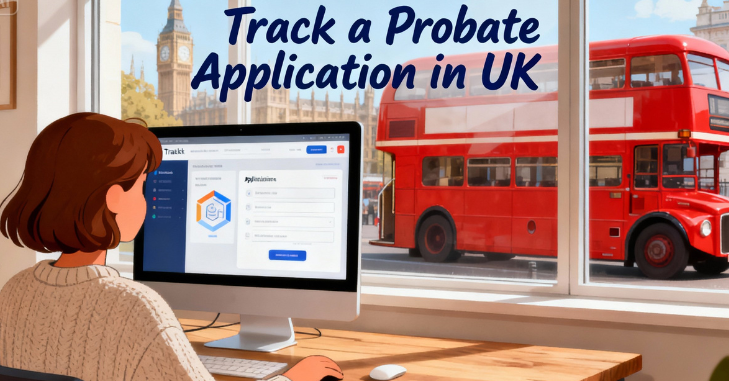
Tracking an application may reveal that your probate is taking longer than anticipated. Here are Common delays in probate applications that often occur due to a few key factors. Incomplete applications are one of the most frequent causes, as missing information, signatures, or required documents can halt the process until everything is corrected and resubmitted.
Complex estates can also take significantly longer, especially when there are numerous assets, multiple beneficiaries, or complicated family arrangements that require additional verification.
Another major source of delay involves inheritance tax issues—if the tax assessment is unclear, incorrectly calculated, or under dispute, the Probate Registry cannot issue the Grant until HMRC confirms that all tax matters have been properly resolved. These factors combined can extend the overall timeline of a probate application in the UK.
Finalising the Probate Process
Once your application for probate is granted, you are allowed to manage the deceased’s estate according to the will or the rules of intestacy.
Responsibilities After Grant of Probate
- Settling Debts: Pay off any remaining debts and liabilities from the estate.
- Tax Responsibilities: Ensure any inheritance tax due is calculated and paid.
- Distribution of Assets: Distribute the remaining assets to the beneficiaries as per the will or intestacy laws.
- Final Accounts: Prepare a final account of the estate for the beneficiaries, summarising how the estate has been handled.
Common Challenges in the Probate Process
Navigating the probate process can sometimes be fraught with complications. Here are some common challenges to anticipate:
Disputes Over the Will
Family disagreements can arise, especially if there are multiple potential beneficiaries or if the will is contested.
Complicated Tax Laws
Understanding tax obligations can be difficult, particularly for large estates. It may be wise to consult a tax advisor or solicitor familiar with inheritance tax.
Delays in Asset Valuation
Some assets, like property or business interests, may require professional valuations, adding to the time taken to settle the estate.
Conclusion
Understanding how to track a probate application in the UK is crucial for managing the complexities of estate administration. By knowing who can apply, what documentation is required, and how to monitor your application, you can navigate this often-challenging process with greater ease.
Whether you are an executor, administrator, or beneficiary, being informed is the first step towards ensuring that the wishes of the deceased are respected and that the estate is handled with care and due diligence. If you encounter challenges along the way, consider seeking professional advice to help steer you through any legal hurdles.
Apart from that, if you want to know more about Scottish Court Cases Database: Everything You Need To Know About: Purpose, Key Features, Benefits, Limitations, And Much More then visit our Law category.
FAQs
Yes. Ways to speed up probate include applying online, submitting complete and accurate documents, paying any inheritance tax promptly, and tracking your application online. Early preparation of valuations and asset details can also prevent delays.
Probate isn’t instant, but it’s there to protect everyone involved and ensure the estate is handled correctly. So, how long does it take to get inheritance money in the UK? In most cases, between 6 to 12 months. Simple estates may resolve faster.
Download and fill in form PA1S to search for a probate record by post. Send it to the address on the form. It costs £1.50 for a search by post. This includes a copy of the probate record and will (if there is one).