

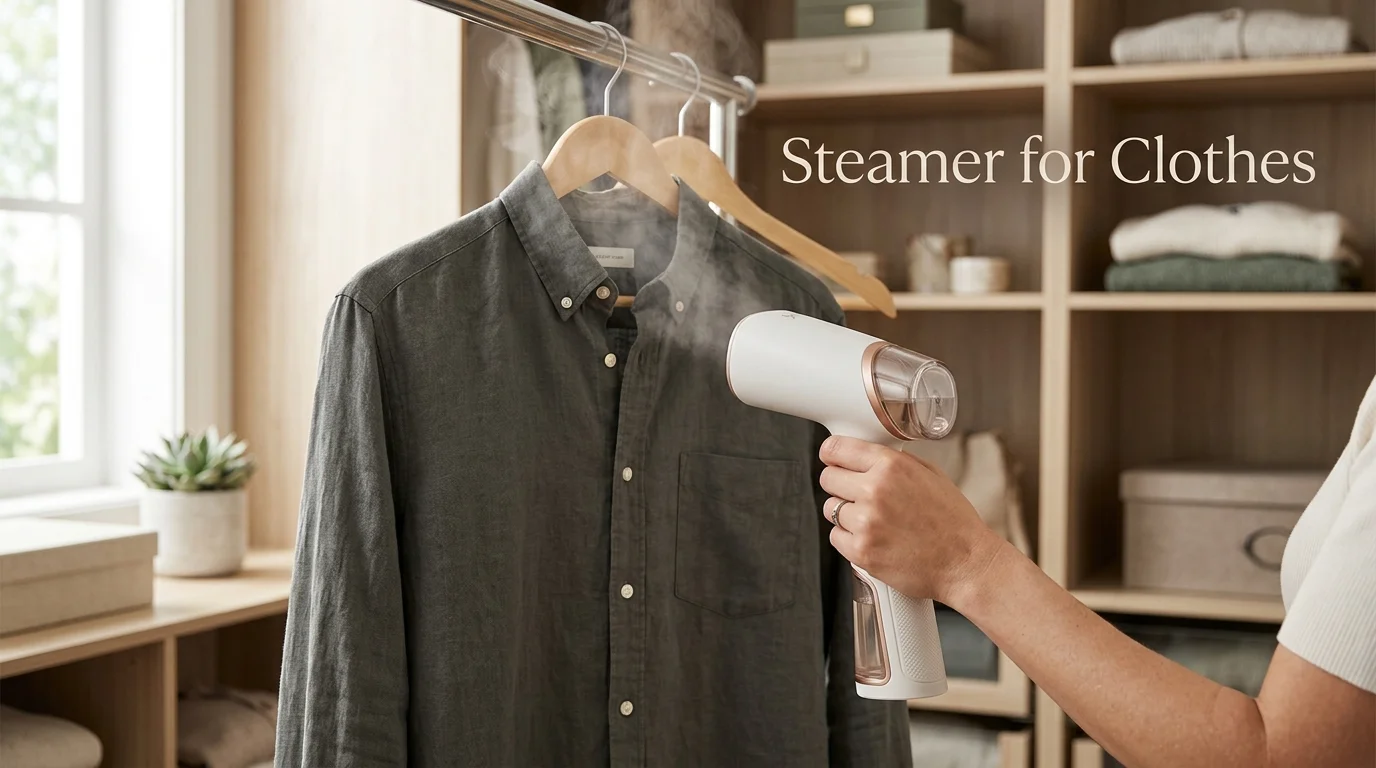
A steamer for clothes can make everyday garment care quicker when you don’t need the sharply pressed finish of an iron. It works especially well for last-minute creases, hanging garments, delicate clothing and items that are awkward to flatten on an ironing board. The right choice depends on how much clothing you steam, the fabrics in your wardrobe, and whether portability or longer running time matters more.
Quick answer: If you want fast crease removal without setting up an ironing board, choose a lightweight handheld garment steamer with steady steam, a practical water tank and a short heat-up time. Choose an upright model if you regularly treat several garments, curtains or larger pieces in one session. Keep an iron if crisp collars and trouser creases matter.
Clothes Steamers at a Glance
| Feature | Handheld model | Upright model | Iron-steamer hybrid |
|---|---|---|---|
| Best for | Quick daily touch-ups | Several garments at once | Mixed wardrobes |
| Portability | Excellent | Limited | Moderate |
| Storage space | Low | High | Moderate |
| Water capacity | Usually smaller | Usually larger | Varies |
| Formal shirt finish | Fair | Fair to good | Good |
| Delicate garments | Very useful | Very useful | Depends on settings |
| Travel suitability | Best option | Poor | Model dependent |
| Main drawback | Frequent refilling | Bulk and storage | Extra weight or cost |
Key Takeaways
- A handheld model is the practical starting point for most people who want quick wrinkle removal.
- Upright steamers suit larger loads and longer garment-care sessions.
- Steam output, tank size, weight and heat-up time matter more than headline wattage alone.
- An iron still wins when you need sharp collars, cuffs and pressed trouser lines.
- Check the garment care label and your appliance instructions before treating unfamiliar fabrics.
- UK shoppers can find basic handheld options around the £20 mark, while stronger or more specialised models can cost considerably more.
What a Steamer for Clothes Does Best
A garment steamer sends hot vapour through fabric so the fibres relax and visible creases soften. Unlike ironing, the process doesn’t require pressing the material firmly against a hot soleplate. That makes steaming convenient for dresses, jackets, pleats, lightweight shirts and other clothes that are easier to work on while hanging.
The finished look differs from traditional ironing, so set expectations before you buy. A steamer can leave everyday clothing looking smooth and ready to wear, but it usually will not create the same rigid collar, cuff or trouser crease as an iron. For many wardrobes, the two appliances complement each other rather than competing for exactly the same job.
Handheld, Upright or Hybrid: Which Type Should You Buy?
For most UK households, a handheld clothes steamer is the most sensible first choice because it combines simple storage with quick setup and enough performance for everyday garments. Current UK testing also reflects strong demand for portable models designed for single outfits, workwear and travel. Their main compromise is a smaller tank, so frequent users may need to refill during larger loads.
An upright appliance makes more sense when garment care is a longer weekly task rather than an occasional morning touch-up. Its larger tank can reduce interruptions, while the hanging system can be useful for dresses, suits, curtains and several shirts in succession. The trade-off is straightforward: you gain running time but give up cupboard space and portability.
Hybrid appliances sit between an iron and a conventional handheld unit. Some include a heated plate or support horizontal use, which can help with collars and areas that benefit from light pressure. They are worth considering if you want one appliance to cover casual steaming and more structured clothing without keeping a separate tool permanently set up.
Pros and Cons by Type
| Type | Main advantages | Main disadvantages | Best fit |
|---|---|---|---|
| Handheld | Compact, fast to set up, travel friendly | Smaller tank, can become tiring on large loads | Daily outfits and small homes |
| Upright | Longer sessions, larger tank, built-in hanging support | Bulky, less portable | Families and frequent steaming |
| Hybrid | More control on structured clothing | Often heavier and more complex | People trying to reduce appliance clutter |
Verdict: Start with a handheld model unless you already know that you regularly work through several garments in one sitting. An upright design solves a capacity problem that occasional users may never have. Choose a hybrid when formal shirts and sharper finishing are a regular part of your wardrobe.
The Specifications That Matter Before You Buy
Steam output is one of the most useful specifications because it tells you more about crease-removing performance than appearance or marketing language. UK buying guides commonly compare output in grams per minute, with stronger continuous steam becoming more useful as fabrics get thicker. Wattage can affect warm-up and heating performance, but it shouldn’t be the only number you compare.
Tank size affects both run time and comfort, creating an important trade-off on handheld appliances. A larger reservoir lets you work longer but also means carrying more water for the entire session. Consider whether you usually steam one outfit before leaving home or tackle several pieces at once, then choose capacity around that routine.
Heat-up time matters most when convenience is your main reason for buying. Several current UK models are designed to become ready within well under a minute, while larger appliances may trade a little setup time for capacity and stronger sustained output. A fast model is especially useful when you typically use it to fix a creased shirt or dress right before you leave.
Weight deserves the same attention as power because you hold a handheld appliance throughout the job. A powerful model becomes less appealing if your wrist tires halfway through a dress or jacket. Check the listed weight with a full tank in mind, particularly if you expect longer sessions or have limited grip strength.
Clothes Steamer vs Iron: Which Is Better?
Neither appliance wins every comparison because the final finish is different. An iron combines heat, moisture, and pressure, which makes it stronger for sharply pressed cotton shirts, cuffs, collars, and trouser lines. Steaming is usually more convenient for hanging garments, delicate pieces, travel creases and quick wardrobe refreshes.
Choose an iron if your clothes regularly need a crisp, structured appearance. Choose a garment steamer when speed, convenience and handling awkward clothing matter more than perfectly pressed edges. Keeping both can make sense if your wardrobe mixes formal workwear with dresses, knitwear, jackets and casual clothing.
Which Fabrics Can You Steam?
Manufacturer guidance indicates that garment steamers can suit a broad range of ironable clothing, including many delicate and awkwardly shaped items. That does not mean every textile, coating or decorative finish should receive the same treatment. Read the garment care label first, then follow the temperature, attachment and distance guidance supplied with your particular appliance.
Start cautiously when you are unsure how a material will respond. Use the lowest appropriate setting where the machine offers adjustable steam, and test an inconspicuous area before treating an expensive piece. Use extra care around glued decorations, special coatings, or materials sensitive to heat and moisture.
How Much Should You Spend in the UK?
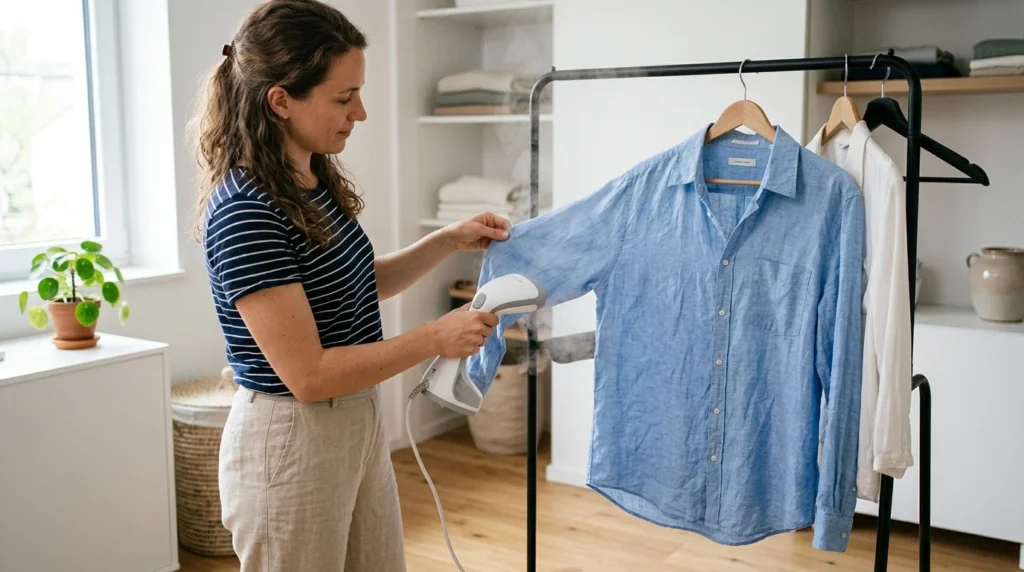
Prices vary widely because the category includes simple portable tools and powerful appliances designed for much longer sessions. Current UK round-ups include entry-level models at roughly £20, popular handheld options in the £30-£80 region, and specialised choices reaching around £100 or more. Prices change frequently, so treat those figures as market context rather than fixed recommended retail prices.
Paying more is worthwhile when the extra money solves a problem you will notice every week. A larger detachable tank, stronger continuous output, lighter handling, better anti-drip design or useful horizontal capability can justify the difference. Paying for a long list of accessories that will stay in a drawer usually adds less value.
Using a Clothes Steamer Effectively
Good technique can make a modest appliance perform better and reduce the temptation to keep passing over the same area. Hang the clothing where you have enough room to work safely, let the appliance reach its operating temperature, and keep the fabric reasonably flat. Move steadily rather than holding concentrated steam over one spot for longer than necessary.
Work from the upper part of the garment down so finished areas are less likely to become creased again. Sleeves, collars, pleats and seams may need slower passes or the attachment recommended by the manufacturer. Let the garment dry and cool briefly before wearing or returning it to a crowded wardrobe.
Never improvise with additives in the water tank unless the manufacturer explicitly allows them. Philips and Tefal both warn against substances such as perfume, starch, and unsuitable descaling chemicals because they can contribute to spitting, staining, or appliance damage. Following the instructions for your exact model is safer than relying on a generic home remedy.
Hard Water and Steamer Maintenance in the UK
Water quality deserves attention because mineral deposits can affect steam-producing appliances over time. Philips states that its garment steamers are designed for tap water, but it also advises that hard-water areas may experience faster scale build-up. For relevant models in harder-water conditions, it recommends distilled or demineralised water, or a suitable mixture with tap water.
Do not assume that every brand uses the same descaling routine. Some appliances have specific rinse systems, anti-scale designs or cleaning instructions that should take priority over general advice found online. Emptying the tank as instructed, allowing the unit to cool and following the manual can help prevent avoidable dripping or mineral build-up.
Maintenance is also a useful buying criterion before you spend money. A removable tank is easier to empty, while accessible components can make routine care less awkward. If you prefer household tools with straightforward upkeep, Inkwave’s compressed air can guide covers another compact appliance category where correct maintenance and handling matter.
Travel Steamers: Check More Than the Size
A folding or lightweight design is useful for UK weekends away and business trips because it takes less luggage space than an iron and board. The smallest model isn’t automatically the best choice, since an undersized tank or uncomfortable grip can become frustrating after one garment. Balance packed dimensions with usable steam time and the weight you will hold.
International travel requires another check that domestic buyers can easily miss. Plug shape and voltage compatibility vary by destination, and a UK plug adaptor alone doesn’t make a single-voltage appliance suitable everywhere. Read the electrical rating on the model before packing it for use outside the UK.
Avoid These Common Buying Mistakes
The first mistake is assuming a steamer will reproduce an iron’s pressed finish on every garment. That expectation can turn a useful quick-care appliance into a disappointing purchase. Decide whether you want relaxed crease removal or sharp pressing before comparing models.
The second mistake is buying the largest tank without considering the extra weight in your hand. The third is focusing on wattage while ignoring steam output, comfort, and refill design. The fourth is choosing a travel model without checking voltage, while the fifth is forgetting how you will store an upright appliance between uses.
Building a Practical At-Home Care Setup
A useful home-care setup usually centers on tasks you do often rather than collecting appliances with overlapping features. If speed matters across your personal-care routine, Inkwave’s Shark Hair Dryer guide looks at another appliance where handling, power, and attachments influence daily convenience. The site’s Revlon Hair Dryer Brush guide also explores the trade-off between combining functions and keeping separate tools.
For clothing, the same principle applies. Buy the simplest tool that solves the majority of your crease-removal problems, then keep an iron only if you need the finish it provides. This approach saves storage space and makes it more likely you’ll use the appliance regularly.
Frequently Asked Questions
Is a steamer for clothes worth buying?
Yes, it can be worth buying if your priority is quick wrinkle removal from hanging clothes without preparing an ironing board. It suits people who wear dresses, jackets, delicate garments, casual shirts or clothing that becomes creased during travel. It is less convincing as a total iron replacement if you frequently need sharp collars, cuffs, and trouser creases.
Can a clothes steamer replace an iron?
It can replace an iron for many everyday touch-ups, especially when a soft, smooth finish is enough. It is less effective for garments that need strong pressure and sharply defined lines. People with mixed wardrobes often get better results by using steaming for speed and keeping an iron for formal pieces.
Are garment steamers safe for delicate clothes?
They can suit many delicate, ironable garments because crease removal doesn’t rely on pressing the fabric firmly against a hot soleplate. Still read the care label and the appliance instructions before steaming an unfamiliar material. Test cautiously when a garment has unusual coatings, trims or decorative details.
What should I look for in a handheld model?
Focus on steam output, weight, tank capacity, heat-up time, and whether the reservoir is easy to remove and refill. Also check cord length, anti-drip design, and whether the appliance can work horizontally if that feature matters to you. Choose specifications that suit your normal number of garments rather than the biggest numbers on the box.
Is a clothes steamer good for travel?
A compact handheld unit can help smooth garments folded in luggage. Look at weight, packed dimensions and heat-up time before choosing one specifically for travel. For overseas trips, confirm the electrical voltage matches your destination rather than relying only on a plug adaptor.
What water should I put in a garment steamer?
Follow the manual for your model, as water guidance varies by manufacturer and product range. Several major brands permit ordinary tap water, while hard-water areas may require distilled or demineralised water, or a specified mixture, to reduce scale. Do not add perfume, starch or cleaning chemicals unless the manufacturer specifically says they are safe.
Final Verdict
For most UK shoppers, a lightweight handheld garment steamer offers the best balance of storage, speed and everyday usefulness. Move to an upright appliance if you regularly steam larger loads, and consider a hybrid if formal clothing makes light pressing useful. The right choice matches your wardrobe, not the model with the longest spec sheet.
Compare steam output, full-tank weight, capacity, heat-up time and fabric guidance before you buy. Check current UK prices across reputable retailers because the difference between entry-level and premium models can be substantial. Once you know whether your priority is quick touch-ups, batch steaming or crisp formal wear, narrowing the options becomes much easier.

