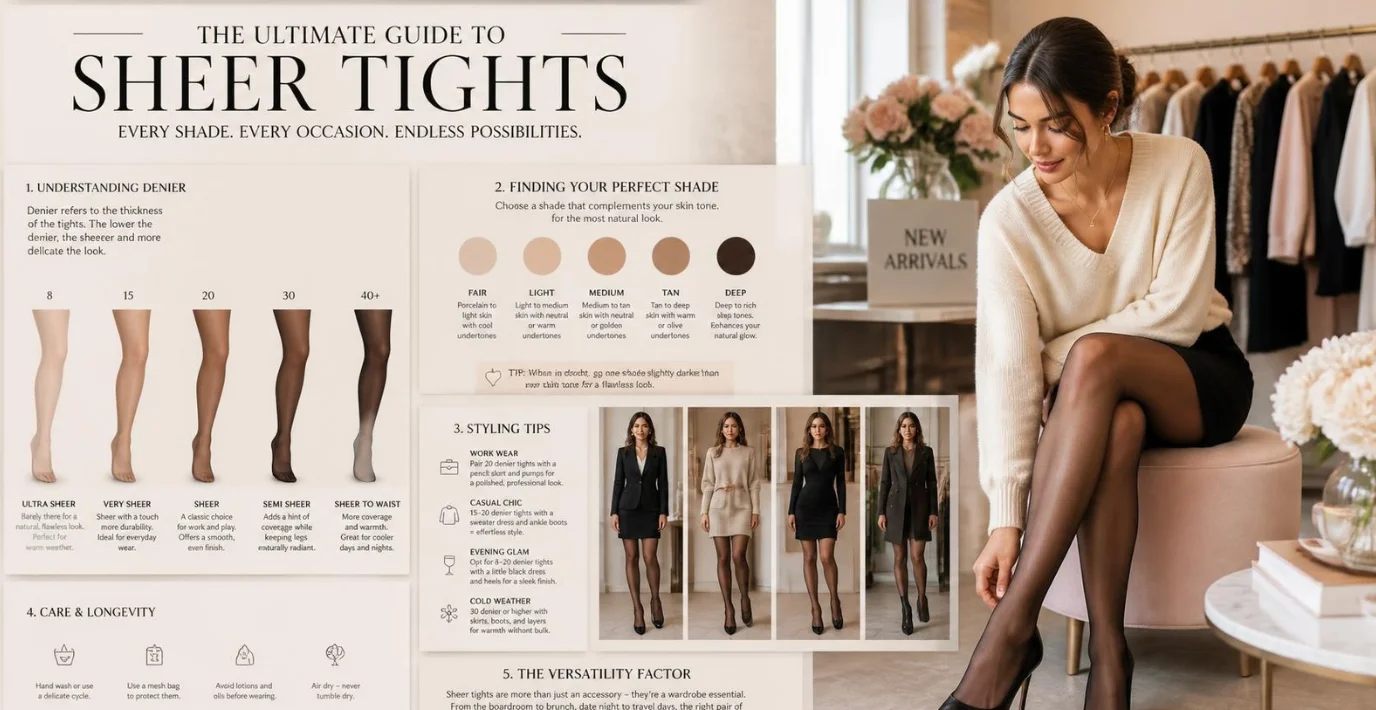
Sheer tights can give an outfit a polished finish without hiding your legs completely. They work for offices, weddings, dinners, and many everyday outfits. The right pair depends on denier, colour, finish, fit, and the occasion.
Direct answer: Choose 8–15 denier hosiery for an almost bare-leg finish and 15–20 denier for more everyday coverage. Nude shades work well when you want subtle polish, while black creates more contrast. Always check fit, toe style, waistband comfort, and finish before choosing a pair.
| Feature | What to look for | Best suited to |
|---|---|---|
| 5–10 denier | Ultra-light, highly transparent finish | Formal events and warm days |
| 10–15 denier | Barely-there coverage | Weddings and smart outfits |
| 15–20 denier | Classic transparent finish | Work, evenings and everyday wear |
| 20–30 denier | More visible coverage | Cooler days and transitional outfits |
| Nude shades | Natural-looking leg coverage | Daywear, work and lighter clothing |
| Black shades | Stronger contrast and definition | Evening outfits and darker clothing |
| Matte finish | Understated appearance | Work and daytime outfits |
| Gloss finish | More noticeable sheen | Parties and evening dressing |
Key Takeaways
- Lower denier numbers usually create a finer and more transparent appearance.
- Around 15–20 denier is a versatile starting point for regular wear.
- Nude hosiery should complement your skin rather than look noticeably darker.
- Black works well when you want the hosiery to become part of the outfit.
- The correct size helps reduce stretching, sagging, and unnecessary pressure.
- Reinforced toes can be useful with closed shoes.
- Fine hosiery needs careful handling because lighter yarns can snag more easily.
What Makes Sheer Tights Different?
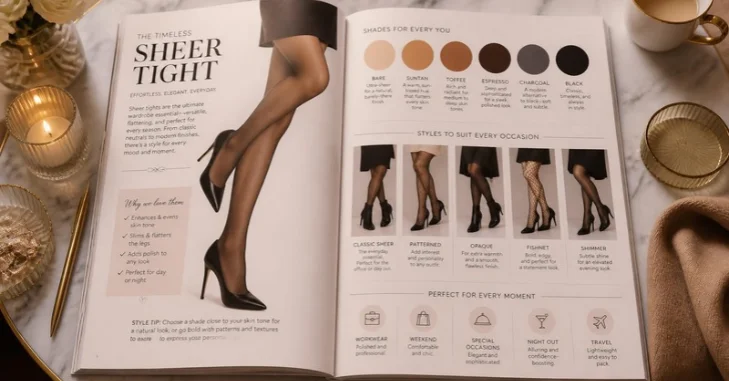
Sheer tights use fine yarns that allow your skin to remain visible through the fabric. This creates a lighter appearance than semi-opaque or opaque hosiery. Lower denier numbers normally produce the most transparent finish.
Denier describes yarn weight rather than being a direct measurement of opacity. Colour, knit, stretch, and fabric composition can also affect the final appearance. Two pairs with the same denier may therefore look slightly different when worn.
Fine hosiery can also make the leg appear smoother and more even. Nude colours create a subtle effect, while black gives greater visual definition. The right choice depends on whether you want the hosiery noticed or almost invisible.
How to Choose the Right Denier
Denier should be your first comparison point because it quickly indicates how light the hosiery may appear. British retailers commonly place lighter transparent styles around the 10–20 denier range. Higher numbers gradually provide more coverage and a stronger fabric appearance.
Very low deniers suit occasions where you want the closest effect to bare legs. A 10 or 15 denier pair can work with wedding guest outfits or formal dresses. These delicate options may require more careful handling during dressing.
Around 15–20 denier often provides a useful balance for work and everyday outfits. You still see the natural leg through the material, but the finish looks more defined. It can also feel less delicate than the lightest styles.
Once you move towards 30 or 40 denier, the look becomes noticeably stronger. These weights can work well during cooler UK weather or with autumn clothing. They may be preferable when you want more coverage without choosing fully opaque hosiery.
Quick Denier Guide
| Denier | Appearance | Good choice for |
|---|---|---|
| 5–10 | Ultra-sheer | Warm weather and special occasions |
| 10–15 | Barely visible | Weddings and formal dressing |
| 15–20 | Classic sheer | Work and everyday outfits |
| 20–30 | Sheer to semi-sheer | Transitional weather |
| 30–40 | Noticeably covered | Autumn and cooler days |
| 60+ | Usually opaque | Cold-weather dressing |
Choosing Between Nude and Black
Nude hosiery works best when the shade complements your natural skin tone. A noticeably orange or overly dark colour can make the finish less convincing. Look at the product on a leg whenever retailer photography allows it.
Consider undertone as well as depth when comparing nude shades. Some colours lean warmer, cooler, or more neutral. A close match usually creates a more natural result than simply choosing the lightest available shade.
Black creates a different effect because it is meant to remain visible. Lower deniers give black a smoky, transparent appearance rather than a solid block. This can work especially well with evening dresses, skirts, loafers, or heels.
A black pair can also suit transitional outerwear. Inkwave’s cropped trench coat styling guide offers additional ideas for balancing shorter outerwear with skirts, dresses, and footwear. Keeping the rest of the outfit coordinated helps the hosiery look intentional.
Matte or Glossy: Which Finish Works Better?
Matte finishes create a quieter appearance because they reflect less light. They can suit offices, daytime events, and outfits where you want understated leg coverage. Matte black also tends to look softer than a high-shine alternative.
Glossy styles reflect more light and can make the hosiery more visible. They often work with party dresses, evening clothing, and deliberately polished looks. A glossy nude colour may also create a more noticeable finish than a matte equivalent.
Neither option is automatically better because the surrounding outfit matters. Consider the fabric of your dress, skirt, and shoes before deciding. A heavily satin outfit may need less shine elsewhere to maintain balance.
Getting the Fit Right
Correct sizing matters because fine hosiery must stretch evenly across the leg. A pair that is too small can feel restrictive and place unnecessary tension on the fabric. A pair that is too large may gather around the ankles or waistband.
Use the manufacturer’s height and weight chart rather than assuming your normal clothing size applies. Hosiery sizing can vary between brands and product ranges. Check both measurements when you sit between two listed sizes.
Pay attention to waistband construction if you expect to wear the pair for several hours. A wide or softer waistband may feel more comfortable beneath fitted clothing. Flat seams can also reduce visible lines under close-fitting dresses and skirts.
Toe construction deserves attention because shoes change what you need. Reinforced toes can provide extra protection inside closed shoes. A sandal-toe design looks less obvious with footwear that reveals more of the foot.
How to Style Fine Hosiery for UK Weather
British weather often makes lightweight hosiery useful during transitional months. Spring and early autumn can feel too cool for bare legs but too mild for heavy opaques. A light pair can bridge that gap without changing the entire outfit.
For work, combine neutral hosiery with tailored skirts, dresses, loafers, or courts. Keep the colour subtle when your office wardrobe is already patterned or strongly coloured. Black can add more structure when your outfit uses darker tailoring.
For weddings and formal events, start with your dress and shoes before choosing hosiery. Nude shades usually support lighter colours without dominating them. Fine black styles can work with darker eveningwear or stronger accessories.
Your outer layers matter too. A structured coat can make lightweight legwear feel more seasonally balanced during colder mornings. Use heavier outerwear rather than relying on low-denier hosiery for warmth.
If the rest of your outfit needs attention, Inkwave’s guide to steamers for clothes covers garment care for dresses, jackets, and other clothing. Follow each item’s care label before applying heat or steam. Fine hosiery itself should always be handled according to its specific washing instructions.
How to Put Them On Without Snagging Them
Preparation makes a noticeable difference with lightweight hosiery because fine yarns can catch easily. Remove rings or bracelets with sharp edges before dressing. Check rough fingernails before touching the fabric.
Gather one leg of the hosiery gently from the waistband towards the toe. Place your toes into the foot section before easing the material gradually over the heel. Continue upwards in small sections instead of pulling from the waistband.
Repeat the process on the second leg before adjusting both sides evenly. Avoid stretching one section much more than another. Once the hosiery reaches your waist, smooth small folds gently instead of tugging them.
A Simple Dressing Routine
- Remove jewellery that could catch the fabric.
- Check your nails for sharp edges.
- Gather the first leg towards the toe.
- Ease the fabric over your foot and heel.
- Work gradually towards the knee and thigh.
- Repeat with the other leg.
- Adjust the waistband and smooth any folds.
How to Wash and Store Them
Hand washing is often the gentlest option when the care label permits it. Use cool or lukewarm water and avoid aggressive rubbing or twisting. Follow the manufacturer’s instructions if machine washing is specifically allowed.
If you use a washing machine, a protective laundry bag can reduce contact with zips and hooks. Choose the programme and detergent recommended on the label. Keep delicate hosiery separate from garments with rough fastenings.
Let the pair dry according to the supplied instructions and avoid unnecessary high heat. Store it away from rough drawer hardware or jewellery. Folding each pair separately can also make finding the right colour easier.
Good wardrobe care extends beyond one item. If you rotate clothing through resale platforms, Inkwave’s Vinted reselling guide covers photographing, describing, and managing pre-loved fashion. Never assume used intimate hosiery is suitable for resale, because platform policies and hygiene expectations may restrict it.
Common Mistakes to Avoid
Choosing by colour alone can lead to the wrong opacity or weight. Check denier first, then compare shade, finish, and construction. This gives you a clearer idea of the final result.
Another mistake is stretching a pair aggressively while dressing. Fine yarns need controlled, gradual adjustment across each leg. Pulling strongly from the waistband places more stress on delicate sections.
Buying the wrong size can also reduce comfort and change appearance. Excessive stretch can make the colour look lighter than expected. Loose sizing can create gathering around the knees or ankles.
Finally, don’t assume low-denier hosiery provides meaningful winter warmth. It adds a light layer, but it cannot replace heavier clothing during cold conditions. Choose thicker legwear when warmth becomes the main priority.
Are Sheer Tights Worth Having in Your Wardrobe?
A good transparent pair fills the gap between bare legs and heavy opaque legwear. It can make dresses and skirts easier to wear across more months of the year. It also gives you more control over how polished or contrasting your outfit appears.
A versatile starting point is one neutral pair for daytime and one black pair for evening outfits. Choose the denier according to how much skin you want visible. Then compare fit, finish, toe construction, and waistband comfort.
You do not need a drawer full of almost identical options. A few carefully chosen pairs can cover work, events, dinners, and transitional weather. Buying around real outfits makes selection easier and reduces unused clothing.
Final Thoughts
The best pair should match your outfit, comfort needs, and desired level of coverage. Start with denier, then narrow your options through shade, finish, size, and toe construction. That process is more reliable than choosing from colour alone.
For most wardrobes, a 15–20 denier option provides a practical place to begin. Add a lighter pair for special occasions or warmer conditions if needed. Choose heavier hosiery once warmth and coverage become more important.
Before buying, picture the exact dress, skirt, shoes, and occasion you intend to pair with it. That simple check prevents many unsuitable purchases. Browse more fashion and clothing guides on Inkwave when planning the rest of your wardrobe.
Frequently Asked Questions
What denier are sheer tights?
Transparent hosiery is usually found at the lower end of the denier scale. Around 8–20 denier commonly creates the classic light appearance. Products closer to 30 denier begin providing noticeably stronger coverage.
Are 20 denier tights see-through?
Yes, 20 denier styles normally allow the leg to remain visible through the fabric. Exact transparency can vary with colour, yarn, stretch, and knit construction. Check retailer imagery when comparing two products with the same number.
Should I choose nude or black hosiery?
Choose nude when you want the legwear to blend more closely with your skin. Choose black when you want a visible contrast or a stronger evening look. Your dress colour, shoes, and occasion should guide the final choice.
Can you wear light hosiery in winter?
You can wear it indoors or during milder winter conditions. It provides much less warmth than high-denier opaque options. Use warmer layers when outdoor temperature and exposure become more important.
How can I stop fine hosiery from snagging?
Handle it slowly and remove jewellery that may catch the yarn. Work the fabric upwards in small sections rather than pulling hard from the top. Proper sizing can also reduce unnecessary tension.