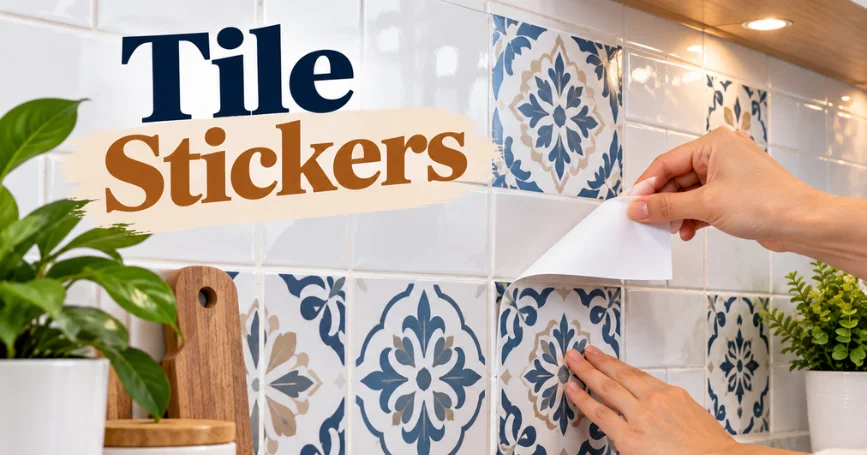
Tile stickers offer a quick way to refresh dated tiles without removing the originals. They suit many kitchens, bathrooms, utility rooms, and small cloakrooms. The best results depend on surface condition, product rating, careful measuring, and patient fitting.
Direct answer: These self-adhesive vinyl covers sit over existing tiles to change color or pattern. They work best on smooth, clean, dry surfaces. Choose products rated for the room, especially in wet areas, on floors, or where heat is a factor. Good preparation matters more than rushing the fitting.
| Question | Practical UK guidance |
|---|---|
| What are they? | Self-adhesive vinyl covers designed to change the appearance of existing tiles. |
| Best surfaces | Smooth, clean, dry, non-porous tiles usually give the strongest bond. |
| Bathroom use | Check the product’s moisture rating and wet-area instructions before fitting. |
| Kitchen heat | Keep vinyl away from direct flames and follow the stated heat limit. |
| Floor use | Use a floor-grade product rather than standard wall vinyl. |
| Current price examples | UK listings vary from low-cost single packs to larger sets around £24. |
| Removal | Gentle warming and slow peeling can help release many removable products. |
Key Takeaways
- Match the product to the location instead of choosing by pattern alone.
- Smooth glazed tiles are easier to cover than heavily textured or damaged surfaces.
- Water resistance does not automatically mean suitability for constant shower exposure.
- Heat ratings vary, so check instructions before fitting near a hob or cooker.
- Floor areas need products designed for foot traffic, cleaning, and slip resistance.
- Measure every tile before ordering because nominal sizes can differ from actual dimensions.
Are Tile Stickers Worth It for a UK Home?
They can be useful when the existing tiles are sound but look dated. The project avoids demolition, grout dust, and the disruption of retiling. It also gives renters and budget-conscious households a reversible decorating option. They are not a repair product for loose, cracked, damp, or failing tiles.
Adhesive covers will follow the surface beneath them, including chips and raised texture. Fix underlying defects before spending money on a decorative finish.
Where Adhesive Tile Covers Work Best
Smooth ceramic and glazed tiles are usually the easiest surfaces to cover. Flat surfaces give adhesive more contact and reduce visible bumps around the edges. Heavily textured tiles can make alignment and adhesion less predictable.
Kitchens, cloakrooms, utility rooms, and bathroom splash zones are common locations. Small spaces can benefit because pattern changes create impact without replacing every finish. Inkwave’s small cloakroom ideas guide offers more ideas for compact bathroom layouts and finishes.
Waterproofing, Showers, and Wet Areas
Product claims differ, so the label matters more than the category name. Some sellers market waterproof vinyl for showers, while others advise against constant water contact. That difference makes product-specific instructions essential for wet zones.
Water can also reach adhesive through edges, seams, or lifted corners. Start with a completely dry surface and press every edge down firmly. If a manufacturer recommends edge sealing, follow that method exactly.
Heat Resistance Around Hobs and Cookers
Kitchen suitability does not mean unlimited heat exposure. One current B&Q listing advises keeping its vinyl at least 20 centimeters from a flame. Another listing gives a specific heat-resistance claim for a different product. Treat every heat figure as product-specific, not universal.
Keep vinyl away from open flames, hot pans, and surfaces beyond its stated rating. Check cooker and splashback guidance before fitting anything behind a hob.
Can You Use Adhesive Covers on Floors?
Standard wall-grade vinyl is not designed for normal foot traffic. Floor-grade products are usually thicker and made for wear, cleaning, and better grip. For that reason, some UK sellers separate wall versions from dedicated floor ranges.
A permanent floor may suit long-term renovation plans better than an adhesive surface. Inkwave’s limestone flooring guide explains another option for durable interior floors. Compare cost, upkeep, installation, and expected lifespan before choosing a route.
How Much Do Adhesive Tile Covers Cost in the UK?
Prices vary because pack size, dimensions, material, and finish are not standardized. A low headline price may cover one tile or a small pack. Compare coverage and dimensions before comparing the final basket cost.
| Current UK example | Listed price | What to check |
|---|---|---|
| QuoteMyWall pack range | From £2.99 | Confirm pack quantity, dimensions, and wall or floor grade. |
| Spin Collective set | £24 | Sets are offered in different tile sizes and quantities. |
| B&Q 20-piece example | £15.99 | This listing uses 10 cm square vinyl pieces. |
| B&Q retro example | £16.99 | Check seller, size, guarantee, and room suitability. |
These prices were visible during research in September 2026 and can change. Delivery charges and pack coverage can shift the real project cost. Measure the area first, then compare like-for-like coverage.
How to Choose the Right Product
Start with the room and surface before looking at colors or patterns. The product should match moisture, heat, cleaning, and wear conditions. A design you love is still a poor buy if its rating is wrong.
Use this buying checklist:
- Confirm the exact width and height of your existing tiles.
- Check whether the vinyl is intended for walls, floors, or both.
- Read the moisture guidance for sinks, baths, and shower areas.
- Check the stated heat limit for kitchens and nearby appliances.
- Look for cleaning instructions and removable-adhesive information.
- Order enough material for cuts, mistakes, and pattern matching.
How to Measure and Fit Them Neatly
Measure several tiles, as older installations aren’t always perfectly consistent. Clean away grease, limescale, soap residue, and dust before fitting. Let the surface dry fully before opening the adhesive backing.
- Measure the tile width and height in millimeters.
- Clean the surface using a product suitable for the existing tile.
- Dry the tile completely and remove any remaining lint.
- Position the cover before exposing the full adhesive surface.
- Smooth from one edge outward to push trapped air away.
- Trim edges carefully with a sharp tool where the product allows cutting.
Work slowly around sockets, corners, and uneven grout lines. Do not stretch thin vinyl because tension can encourage later lifting. If alignment starts badly, correct it immediately rather than forcing the next piece to match.
Cleaning and Everyday Care
Use mild cleaning methods unless the manufacturer says otherwise. Abrasive pads and aggressive chemicals can dull printed surfaces or damage protective coatings. Several suppliers recommend gentle wiping instead of heavy scrubbing.
Wipe spills before color stains the finish. Check edges occasionally in areas exposed to steam or repeated splashing. Replace a damaged section early if water or dirt begins reaching underneath.
Removal, Rentals, and Future Redecorating
Many removable vinyl products can be softened with gentle heat before peeling. Pull slowly and keep the material close to the surface as you remove it. Always follow the seller’s removal instructions to reduce residue or surface damage.
Renters should check tenancy conditions before changing visible finishes. Test a spare or hidden area when the original surface is delicate or already damaged. If a wider room refresh follows, Inkwave’s wallpaper removal guide covers another preparation-heavy decorating task.
Design Ideas That Suit UK Kitchens and Bathrooms
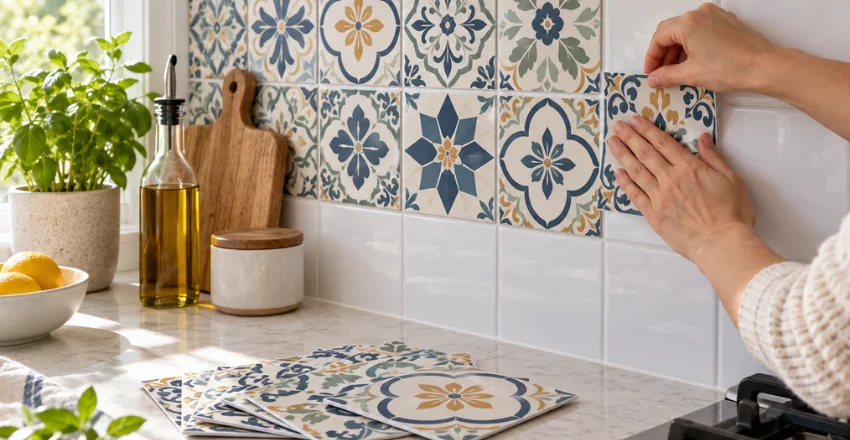
Small patterns can add detail without dominating a compact room. Marble, terrazzo, geometric, Victorian, and plain-color prints are widely available in UK ranges. Choose a design that works with worktops, cabinets, sanitaryware, and lighting.
For a calm bathroom, pair soft stone effects with warm white walls and simple metal finishes. In kitchens, patterned splashbacks can work well beside plain cabinet doors. In small cloakrooms, one feature area can create more impact than covering every tiled surface.
Common Mistakes to Avoid
Most disappointing results come from product mismatch or rushed preparation. Accurate measuring and careful cleaning prevent many visible problems. Check these issues before you start:
- Buying wall-grade vinyl for a busy floor.
- Applying adhesive over damp, greasy, dusty, or loose tiles.
- Assuming every waterproof claim includes constant shower exposure.
- Fitting near direct heat without checking the manufacturer’s rating.
- Ordering by nominal tile size without measuring the actual surface.
- Ignoring grout depth, chips, or texture that may show through.
- Cleaning the finished surface with abrasive pads or harsh chemicals.
A Simple Buying Decision
Measure one tile and calculate the total area before you buy anything. Check the product rating against water, heat, wear, and cleaning conditions. Then compare current UK options and buy only after confirming size, coverage, and fitting instructions.
If the surface needs permanent repair, fix it first and postpone the decorative layer. A sound base will always deliver better results than covering a failing finish. For related projects, browse Inkwave’s Home Improvement section before planning the wider room update.
Frequently Asked Questions
Are tile stickers waterproof?
Some vinyl products are marketed as waterproof or water-resistant for kitchens and bathrooms. Wet-area suitability still varies by brand and product line. Check whether the instructions permit shower use or constant water contact.
Can adhesive covers go inside a shower?
Some products are sold for shower walls, while others explicitly exclude constant water exposure. Surface preparation and sealed edges become especially important in wet zones. Use only a product whose instructions clearly allow that location.
Will removable vinyl damage existing tiles?
Many products are designed to peel from smooth tiles with limited residue. Existing damage, weak coatings, or poor removal technique can change the outcome. Test a hidden area and follow the stated removal method.
Can they cover deep grout lines?
Individual pieces usually work best when they sit within the tile face. Deep joints beneath sheet vinyl may remain visible through the finished surface. Check the chosen system’s fitting method before covering grout lines.
How long do adhesive tile covers last?
No single lifespan applies to every product or room. Preparation, heat, moisture, cleaning, and edge wear all affect durability. Treat seller lifespan claims as product-specific rather than a universal expectation.
Can they be fitted behind a gas hob?
Only use a product whose heat guidance allows that position. Keep vinyl away from open flames and follow the stated clearance. If the instructions are unclear, choose a different splashback material.
Final Takeaway
Adhesive tile covers can refresh a sound tiled surface without a full renovation. Their success depends on choosing the right grade and preparing the base carefully. Measure first, read the technical instructions, and treat wet areas, floors, and heat zones with extra care.